Businesses have spent decades structuring work around systems and departments. Sales, service, finance, and operations each operated within clear boundaries. Software helped manage complexity but often reinforced separation. A new phase of enterprise technology is now reshaping this model. The introduction of agentic systems marks a shift from tools that support people to systems that collaborate with them.
This new stage builds on predictive and generative capabilities. Instead of only analysing data or producing content, agents now participate in processes. They understand context, react to changing situations, and assist across multiple activities. The focus moves from automation to coordinated work between humans and digital assistants.
The evolution of enterprise agents follows three distinct stages.
The first stage centres on specialised contributors. These agents perform defined tasks with consistency and speed. They monitor operations, organise information, and provide clear recommendations. In service environments they analyse interactions and prioritise requests. In finance they review transactions and highlight irregular patterns. In commercial operations they anticipate demand and prepare summaries for decision makers. The value lies in reliable execution and timely insight.
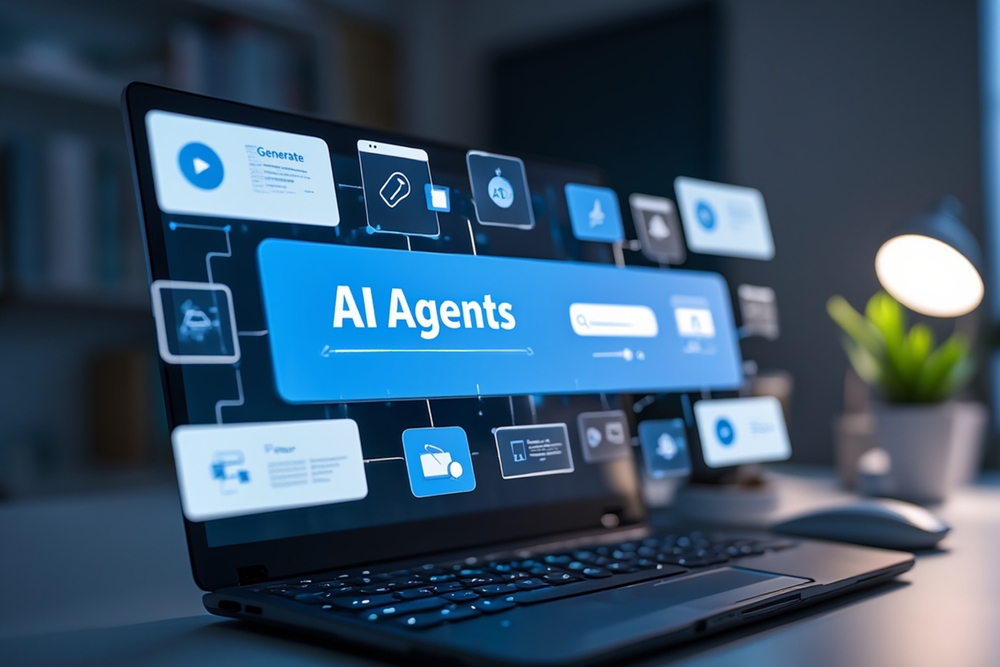
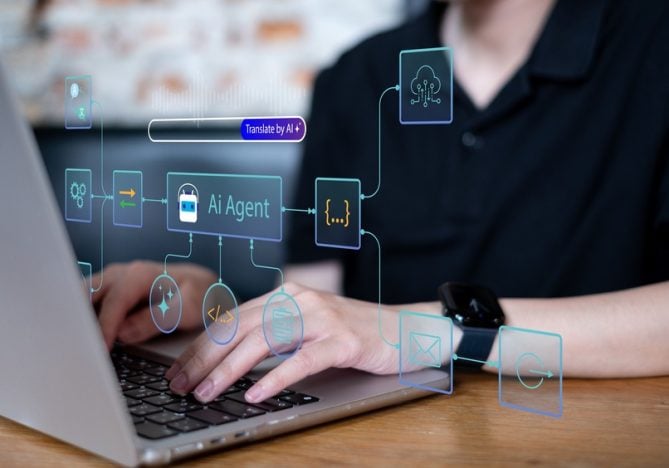
The second stage introduces collaboration between agents. Instead of acting independently, multiple specialised agents coordinate around a shared objective. One agent interprets a request. Another checks availability. A third evaluates financial implications. A coordinating layer combines the outputs into a clear response for human review. This structure improves reliability and keeps sensitive information controlled within defined responsibilities. Businesses gain flexibility because additional agents can be introduced without redesigning the entire workflow.
The final stage expands beyond internal processes. Agents interact across organisations and systems. Decisions become negotiated rather than executed in isolation. The enterprise begins to operate around outcomes instead of departments. The focus shifts to relationships, adaptability, and trust rather than individual efficiency measures.
Such change requires careful governance. Trust and accountability become essential operating principles. Agents must operate within defined limits and recognise uncertainty. Clear ownership of decisions must exist. Oversight processes must allow intervention when necessary. Security and privacy controls must evolve alongside automation. These are not technical preferences but organisational responsibilities.

At the center of this evolution stands Agentforce — Salesforce’s enterprise-grade agentic AI platform designed to operationalise these principles at scale. Rather than operating as experimental tools or isolated assistants, Agentforce agents function within CRM workflows with clearly defined roles, governed data access, and built-in accountability. This structure enables organisations to move beyond fragmented automation toward coordinated, outcome-driven collaboration between humans and AI. The objective is not replacement, but amplification: humans provide strategic direction and judgement, while agents manage orchestration, analysis, and cross-system execution.
For leadership teams, the challenge is less about adopting technology and more about intentionally designing cooperation between people and digital workers. Successful organisations will treat this transition as an operational evolution rather than a software deployment.
NetU supports businesses in preparing for this shift. The focus is on structuring processes, governance, and adoption so that Salesforce capabilities fit naturally into daily operations. With the right preparation, organisations can use agentic systems to improve clarity, responsiveness, and decision making while maintaining control and accountability.