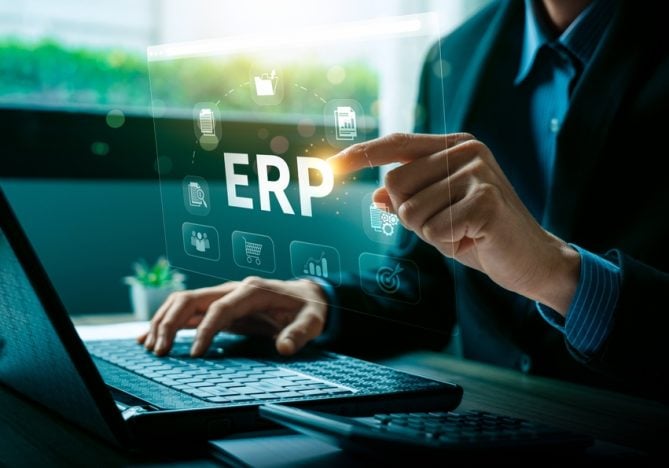
Enterprise Resource Planning (ERP) systems have become central to how organizations manage operations, resources, and growth. For executives, selecting the right ERP is not only a technology decision. It is a strategic step that shapes efficiency, resilience, and long-term success.

Why organizations look to ERP
Many companies still rely on labour-intensive processes, with staff manually transferring data between systems. This creates risks of errors, delays, and incomplete insights. Others struggle with outdated tools that provide little visibility into operations. In both cases, leadership faces the same challenge: limited control and inaccurate information. A modern ERP addresses these pain points by connecting business processes, people, and data in one unified system.
What makes a modern ERP valuable
Modern ERP platforms deliver much more than accounting. They provide real-time data, forecasting, and analysis that directly support decision-making at the executive level. They also scale as organizations expand, add new functions, or enter new markets. With cloud-based deployment, companies avoid heavy infrastructure costs while benefiting from security, flexibility, and faster updates.
ERP systems are modular. Businesses may begin with core financial management and add modules for order management, inventory, customer management, professional services, or manufacturing as needed. This flexibility allows leaders to adopt ERP step by step, reducing risk while ensuring that investments align with current and future priorities.
Key questions for decision-makers
Selecting the right ERP involves careful evaluation. Executives must consider not just the cost of the system today but also how it adapts to future needs. Implementation timelines, data migration, and user-friendliness are critical factors that influence adoption. The system should be configurable enough to match business processes without requiring excessive customization.
Integrator’s expertise in project management and integration is equally important. Rolling out ERP in stages often lowers risk, though it may take longer to realize full benefits. Running legacy systems in parallel for a period can also ease the transition. In all cases, leaders need clear milestones, visibility into progress, and assurance that updates and enhancements will be delivered efficiently.
Capabilities that matter most
Popular ERP functionalities include financial planning, order and inventory management, customer relationship management, and professional services automation. These features help businesses monitor performance, manage projects, streamline billing, and track resources. They also provide the real-time insights leaders need to forecast outcomes and guide strategy.
Ultimately, ERP is about creating transparency and control. It eliminates silos, reduces inefficiencies, and allows leaders to focus on growth rather than managing fragmented systems.

NetU in ERP transformation
NetU helps organizations in Cyprus and the region make informed ERP decisions and implement solutions that align with their strategic goals. With extensive experience in enterprise technology and system integration, NetU supports every stage of the journey, from requirement analysis and planning to implementation, training, and long-term support. By guiding leadership through the process and tailoring ERP to industry needs, NetU ensures that businesses gain the clarity, resilience, and agility needed to thrive in today’s competitive environment.